Chest | Back | Shoulders | Biceps | Triceps | Legs | Abs
Shoulder training for lifters typically balances individual preference with injury history. Is overhead heavy lifting the primary objective, or does the mere thought induce discomfort? Are raises a foundational component, or a low-priority accessory?
For those familiar with our 10 Best series, our methodology combines two core principles: initiating with a heavy, muscle-building compound press, followed by targeted isolation exercises. This time-honored approach yields optimal shoulder workouts for all genders while accommodating diverse movement selections. Our criteria for exercise inclusion are as follows:
Ease of acquisition and execution
Comprehensive muscle stimulation and intensity
Popularity among dedicated lifters and bodybuilders (a critical factor)
Equipment accessibility in commercial gyms
Below, you will find sufficient variations of each exercise to sustain long-term programming. After reviewing, prioritize nutrition and supplementation to support growth, then implement the three complete workouts provided.
10 Best Shoulder Exercises
Push-Press
Rationale for inclusion: The push-press enables greater load and rep volume compared to most overhead exercises, making it an effective catalyst for shoulder hypertrophy. It is appropriately classified as a full-body movement—rather than a pure shoulder exercise—due to its engagement of the lower body, core, deltoids, triceps, and upper pectorals.
Compound movements like this activate significant muscle mass and enhance muscle-building hormone release more effectively than isolation exercises. It is a favorite of bodybuilders seeking to build strength and athleticism during the offseason, such as in Steve Cook’s shoulder and arms workout.
Push-Press Variations for Shoulder Development:
Barbell push-press
Dumbbell clean and push-press
Kettlebell push-press (double-arm or single-arm)
Front squat push-press
Dumbbell thruster
Programming Guidelines: This does not need to be a weekly staple. When utilized, perform it first in your workout—after a thorough warm-up—for 3–4 sets of 6–8 reps. Terminate each set before fatigue compromises form.
Military Press
Rationale for inclusion: Like the push-press, this is a challenging full-body lift. Once contested as a powerlifting movement, the barbell military press remains popular for setting ambitious strength goals. However, research indicates that dumbbells elicit greater muscle activation—even with reduced total load.
Expert Tip: Maintain a neutral hip posture and master core bracing to safeguard the lumbar spine. Prolonged injury will hinder progress.
Military Press Variations for Shoulder Development:
Standing military press
Dumbbell shoulder press (double-arm, single-arm, alternating)
Dumbbell rotational shoulder press
Double-kettlebell shoulder press
Programming Guidelines: After a thorough warm-up, select a challenging load that does not compromise form. Classic rep schemes like 5x5 are ideal for muscle and strength. For hypertrophy-focused goals, use sets of 6–8 or 8–10 reps—where the final rep is challenging but not a failure risk.
Rear Delt Row
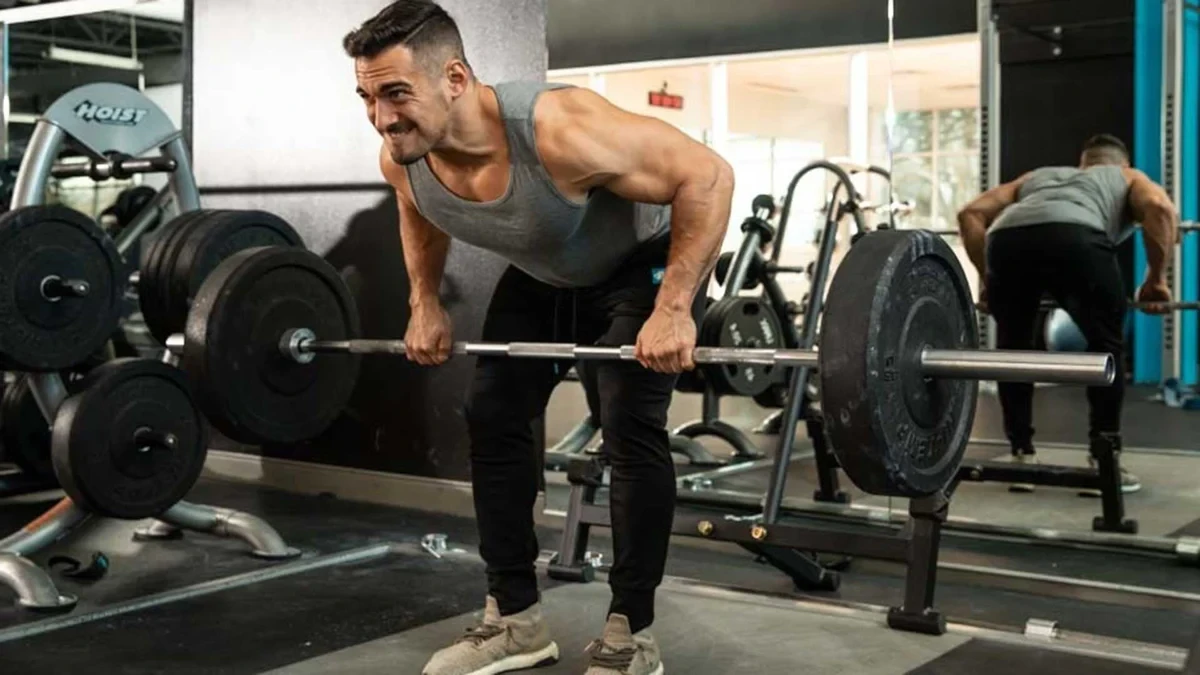
Rationale for inclusion: Why include a row in a shoulder exercise article? Rowing movements engage not only the back but also the rear deltoids to a substantial degree. Experts such as physical therapist John Rusin—creator of the BodyFit resource Unstoppable: The Ultimate Guide to Training Through Injury—emphasize that shoulder health is optimized when rowing volume is two to three times that of pressing.
A 2014 study further supports this: Incline bench rows activate the rear delts as effectively as flyes and stimulate the middle delts more than dumbbell shoulder presses, cable lateral raises, or barbell upright rows. This makes it a time-efficient staple for shoulder workouts.
Rear Delt Row Variations for Shoulder Development:
Incline dumbbell row
Bent-over dumbbell rear delt row
Programming Guidelines: As part of a shoulder workout, perform this immediately after press variations for 8–10 reps per set, or as a high-rep finisher (10–12+ reps per set).
Seated Dumbbell Press
Rationale for inclusion: Replacing a barbell with dumbbells for overhead presses ensures unilateral engagement, promoting balanced development. The extended range of motion also maximizes muscle growth. A seated position eliminates lower-body contribution, allowing focused shoulder activation.
Seated Dumbbell Press Variations for Shoulder Development:
Seated dumbbell press
Seated kettlebell press
Programming Guidelines: Perform this first in your workout for heavy sets of 6–8 reps. For maximal load, use a spotter to assist with weight positioning and provide support (or forced reps) as you approach failure.
Seated Barbell Press
Rationale for inclusion: Choosing a barbell over dumbbells is not merely a preference—it offers functional benefits. For example, positioning a bench in a rack and pressing from safety pins allows precise range-of-motion adjustment. Smith machine barbell presses also enable safer proximity to failure and focused slow negatives.
Seated Barbell Press Variations for Shoulder Development:
Seated military press
Smith machine shoulder press
Smith machine behind-the-neck press (if shoulder mobility permits)
Machine shoulder press
Programming Guidelines: Perform these first in your workout with challenging loads for 6–8 reps per set. This is how bodybuilder Lawrence Ballenger initiates his Boulder Shoulder workout before progressing to lighter lifts.
Upright Row
Rationale for inclusion: Upright rows are often labeled as shoulder-damaging, but form is paramount. As personal trainer Jimmy Peña details in his article How Wide Should My Grip Be on an Upright Row, avoid a narrow grip (which induces internal shoulder rotation). Opt for a wider grip where the upper arms extend directly lateral to the torso.
Science supports this: A wider grip significantly increases deltoid activation while minimizing biceps involvement. Unilateral performance yields the same benefit.
Upright Row Variations for Shoulder Development:
Barbell upright row
Dumbbell upright row (double-arm or single-arm)
Cable upright row
Smith machine upright row
Programming Guidelines: Despite being a multijoint movement, do not perform this first. Use it after presses (8–10 reps per set), in supersets with front raises, or as a burnout finisher.
Arnold Press
Rationale for inclusion: This is a dumbbell press with rotational variation—why a separate entry? Because the exercise’s namesake—Arnold Schwarzenegger—identified a key training principle.
Research shows this staple of old-school programs like Blueprint to Mass activates the front and medial delts more than other dumbbell press variations. Additionally, many lifters find it more shoulder-joint-friendly—a critical dual benefit.
Arnold Press Variations for Shoulder Development:
Seated Arnold press
Standing Arnold press
Standing single-leg Arnold press
Programming Guidelines: These are ideal first or second in a workout (after a basic overhead press). Consider pyramiding weight (increasing load, decreasing reps) for 4 sets of 12, 10, 8, and 6—like in the 3-Move Shoulder Builder workout.
Rear Delt Fly
Rationale for inclusion: Why two rear deltoid exercises? These small muscles are frequently undertrained yet critical for posture and rotator cuff health.
A bent-over dumbbell variation—freestanding or bench-supported—is effective. Avoid momentum or poor control. For pec-deck machines, use a neutral or palms-in grip (not palms-down) to maximize muscle activation.
Programming Guidelines: Perform this later in a workout for 10–12+ reps per set—either standalone or supersetted with lateral raises (as in The Simple Workout for Super Shoulders).
Lateral Raise
Rationale for inclusion: The lateral raise is among the most popular and effective isolation exercises for shoulders, yet it requires precise form to master. Beginners benefit from two key cues: initiate movement with the elbows, and lower the arms only to 30 degrees from the torso. These adjustments enhance exercise efficacy and difficulty.
Lateral Raise Variations for Shoulder Development:
Dumbbell lateral raise (double-arm or single-arm)
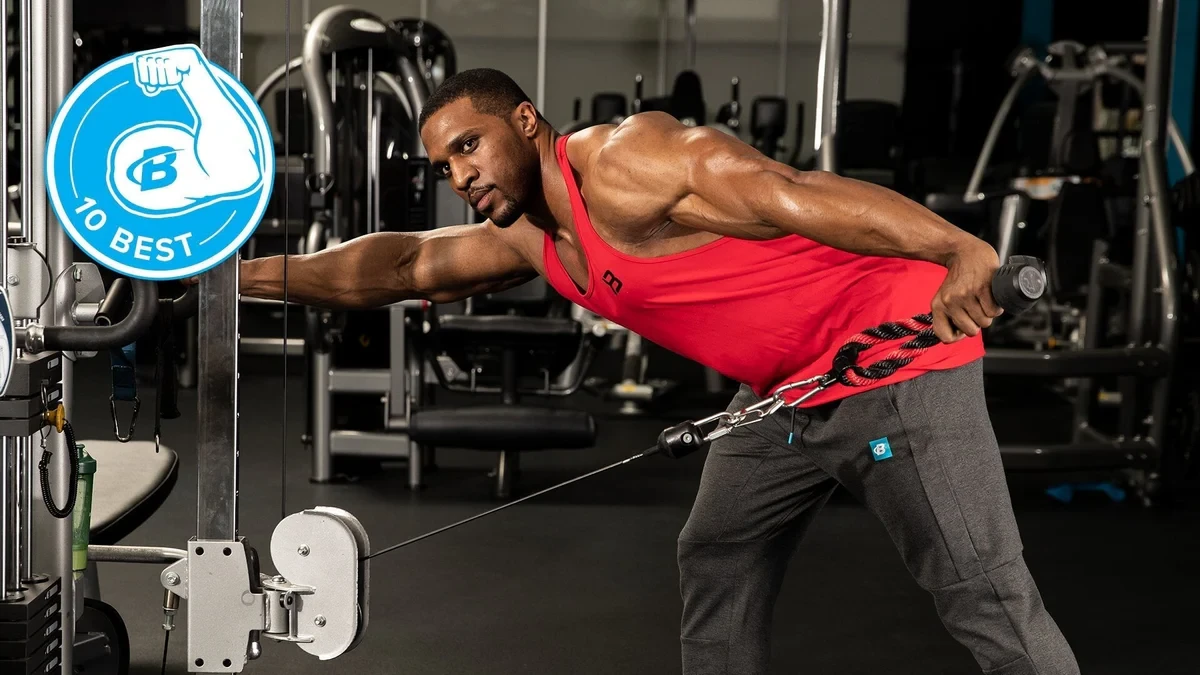
Leaning cable lateral raise
Cable lateral raise
Programming Guidelines: To prioritize medial delts, perform this first; to target front/rear delts, perform it last. In either case, use at least 8–10 reps per set. Periodically “run the rack” (progressively lighter weights) for enhanced hypertrophy—ideally after a pre-workout supplement.
Front Raise
Rationale for inclusion: The purpose is simple: raising a straight arm anteriorly activates the anterior deltoid. However, it is not universally mandatory. Pressing movements already heavily target the anterior delts, which are often overdeveloped in individuals who prioritize chest training over back training.
For optimal results, choose unilateral dumbbell/cable raises or alternating variations. This maximizes mind-muscle connection and balanced development.
Front Raise Variations for Shoulder Development:
Barbell front raise
Alternating dumbbell front raise
Single-arm cable front raise
Programming Guidelines: If included, perform this in the second half of your workout. It is an excellent burnout finisher—especially supersetted with lateral raises (as in Abel Albonetti’s Brutal Mass-Building Shoulder Workout).
Best Shoulder Workouts
Hard and Heavy Shoulder Workout
For lifters who prioritize overhead heavy lifting, this traditional free-weight-only workout begins with heavy, explosive push-presses, followed by dumbbell work for the lateral and rear delts. It pairs effectively with a two-exercise trapezius finisher.
Beginner Shoulder Workout
Beginners do not require complex or high-volume shoulder training—particularly if they already target the anterior delts through chest training. Focus on three key exercises, gradually increasing load over time, and this will suffice for growth.
Machine Pump Shoulder Workout
Experienced lifters recognize that high-rep pump work enhances shoulder growth. This workout is effective standalone or as a second shoulder session—scheduled 72 hours after a free-weight/press-focused day. Pair it with a stimulant-free pre-workout containing nitric oxide (NO)-boosting ingredients to maximize pump.