Chest | Back | Shoulders | Biceps | Triceps | Legs | Abs
Over the years, numerous studies have endeavored to identify the most effective biceps exercises—a pursuit that should come as no surprise. Few enthusiasts would deny that accessing an electromyography (EMG) device would promptly lead to testing their biceps, a candid acknowledgment of the muscle group’s appeal.
So, which exercise emerges as the "winner"? When evaluating biceps activation via EMG alone, the concentration curl—a mainstay in the training routines of golden-era bodybuilders such as Arnold Schwarzenegger and Lou Ferrigno—consistently ranks highest. Yet, a critical caveat persists: No experienced bodybuilder we have consulted endorses this exercise unequivocally.
Why? Experienced lifters recognize that while muscle activation is important, it is not the sole determinant of a superior muscle-building exercise. Instead, we prioritized the following parameters to curate the 10 best biceps exercises:
Accessibility of execution and learning curve
Comprehensive muscle stimulation and intensity
Prevalence among dedicated lifters and bodybuilders (a meaningful metric)
Availability of equipment in commercial fitness facilities
This list is not definitive—it serves as a starting point for discussion. We encourage you to experiment with these movements within the three complete workouts provided below.
10 Best Biceps Exercises
Barbell or EZ-Bar Curl
Why it's on the list: The standard shoulder-width curl uniformly activates the short and long heads of the biceps. Adjusting grip width allows for nuanced emphasis—a wider grip targets the short head, while a narrower grip prioritizes the long head. Additionally, the exercise accommodates heavy loading and eliminates the need for prolonged unilateral work. Few additional justifications are required: If you perform only one biceps exercise, this should be it.
Prefer a straight bar to a cambered EZ-bar? Feel free to do so, provided wrist comfort is maintained. A 2018 study noted that while both barbell and EZ-bar variants elicit greater biceps activation than dumbbell curls, “The minimal difference between [barbell] and EZ variants… renders the choice between these two exercises a function of subjective comfort.”
Barbell Curl Variations for Biceps Growth:
Standing Barbell Curl (standard, close grip, wide grip)
Standing EZ-Bar Curl (standard, close grip, wide grip)
Seated Barbell Curl (emphasizes the top half of the range of motion)
In your workout: Perform heavy curls at the beginning of your biceps session, when you can challenge yourself with maximal load. For a strength focus, select a weight you can handle for 6–8 reps or a classic size-and-strength rep range like 5x5. A frequent error in biceps training is excessive bodily momentum during this movement—maintain strict form, particularly when lifting heavy.
Cable Curl
Why it's on the list: At first glance, the cable curl resembles the standing barbell curl—both are bilateral movements with a shoulder-width, underhand grip. However, like all effective cable-based muscle-building exercises, the angle of loading provides constant tension on the biceps throughout the full range of motion. This means no rest at the top or bottom of the rep, increasing total time under tension (TUT). Additionally, most gyms offer diverse handle options and body positions to vary the stimulus.
Cable Curl Variations for Biceps Growth:
Cable Straight-Bar Biceps Curl
Squatting Cable EZ-Bar Biceps Curl
Standing Reverse-Grip Cable Curl
Lying Cable Biceps Curl
In your workout: Since the cable curl is similar to the barbell curl, select one or the other. If performed first, use a challenging weight for 6–10 reps per set. If integrated later, target 8–12+ reps.
Dumbbell Curl
Why it's on the list: Is the dumbbell curl truly distinct from the barbell curl? The answer depends on your execution. While the two can be performed similarly, we do not recommend pairing them in the same workout. The dumbbell curl’s unique value lies in its versatility: It can be done standing or seated, bilaterally or unilaterally, with wrist rotation (e.g., Zottman curls for forearms) or pinky supination (to isolate the biceps). In short, it offers unmatched flexibility.
Dumbbell Curl Variations for Biceps Growth:
Standing Dumbbell Curl (bilateral, alternating)
Seated Dumbbell Curl (bilateral, alternating)
Zottman Curl
In your workout: If performed after barbell or cable curls, emphasize variation by using Zottman curls, or transition from bilateral seated curls to unilateral work once fatigued. If reps become sloppy, focus on eccentric (negative) phases—research shows eccentric-focused reps can produce higher force than concentric reps, even when fatigued.
Chin-Up
Why it's on the list: Individuals who have performed maximum-repetition chin-ups will attest to the significant biceps engagement this movement demands. While both pull-ups (overhand grip) and chin-ups (underhand grip) involve substantial elbow flexion, research consistently demonstrates that chin-ups elicit markedly greater biceps activation.
Chin-Up Variations for Biceps Growth:
Standard Chin-Up
Machine-Assisted Chin-Up
Band-Assisted Chin-Up
L-Sit Chin-Up
In your workout: If you train back and biceps together, the chin-up serves as an excellent transitional exercise (3–4 sets of 8–12 reps). To increase difficulty, add weight; to reduce it, use assistance. For wrist/elbow comfort, try a neutral grip (palms facing in), cambered grip, or ring-based chin-ups. If grip fails, use wrist straps. This movement also functions as a primary upper-back and biceps exercise in home workouts—e.g., in strength coach Paul Carter’s Jacked at Home: Bodyweight Muscle-Building Workouts.
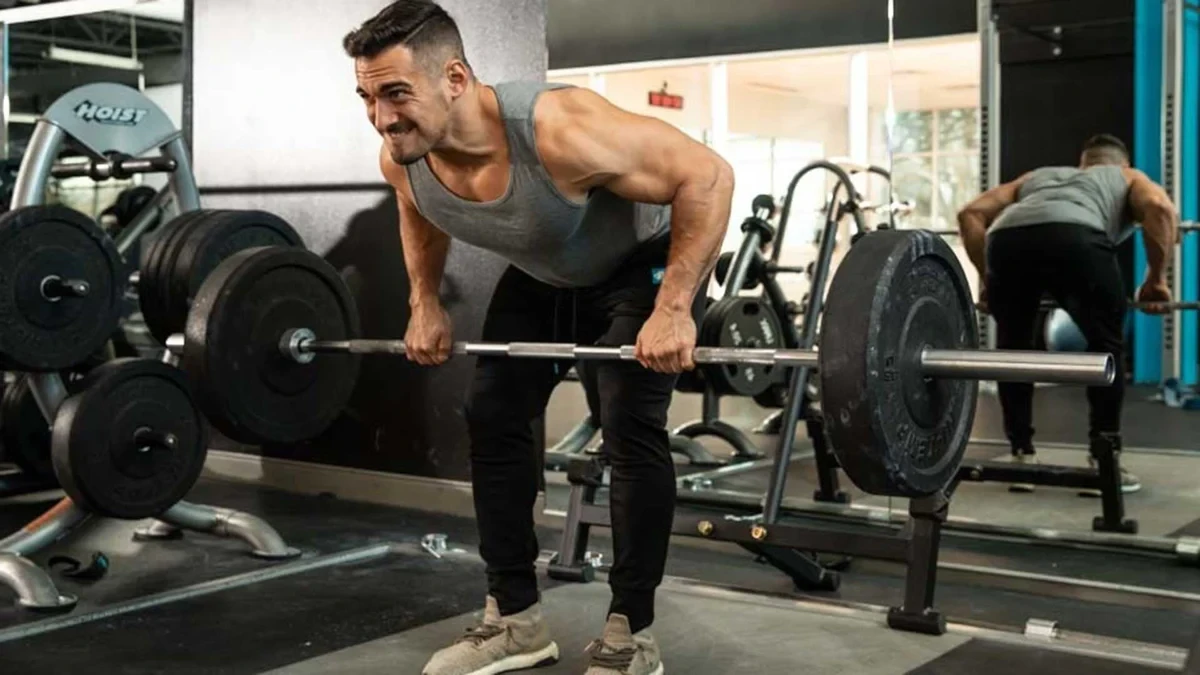
Reverse-Grip Barbell Row
Why it's on the list: The bent-over row is often revered by lifters as the “fourth powerlift.” Regardless of one’s stance on this designation, the movement is back-dominant and allows for heavy loading. When performed with a reverse grip, the biceps are highly activated—making it an effective transitional exercise between back and biceps training, rather than a staple of biceps-only sessions.
Row Variations for Biceps Growth:
Reverse-Grip Bent-Over Row
Cable Seated Row (underhand grip)
Incline Dumbbell Row (underhand grip)
In your workout: Integrate this exercise into your back routine or as a bridge between back and biceps training. Use a heavy load and target the classic muscle-building rep range of 8–12 reps.
Hammer Curl
Why it's on the list: Curls with a neutral (palms facing) grip activate not just the biceps, but also the brachialis—a muscle beneath the biceps that is often overlooked in EMG studies. Increasing brachialis hypertrophy can “elevate” the biceps from beneath, contributing to overall arm size. Additionally, hammer curls were a cornerstone of Chris Hemsworth’s training regimen during his transformation for the Thor franchise.
A pro tip: The cable rope hammer curl is superior to the dumbbell version, as it maintains constant tension throughout the range of motion.
Hammer Curl Variations for Biceps Growth:
Cable Rope Hammer Curl
Dumbbell Hammer Curl (bilateral, alternating, seated)
Cable Rope Preacher Hammer Curl
In your workout: Hammer curls are typically performed in the middle or end of a workout (8–12 reps per set). Experiment with isometric holds to induce a deep muscular burn—even seasoned athletes find this challenging.
Incline Curl
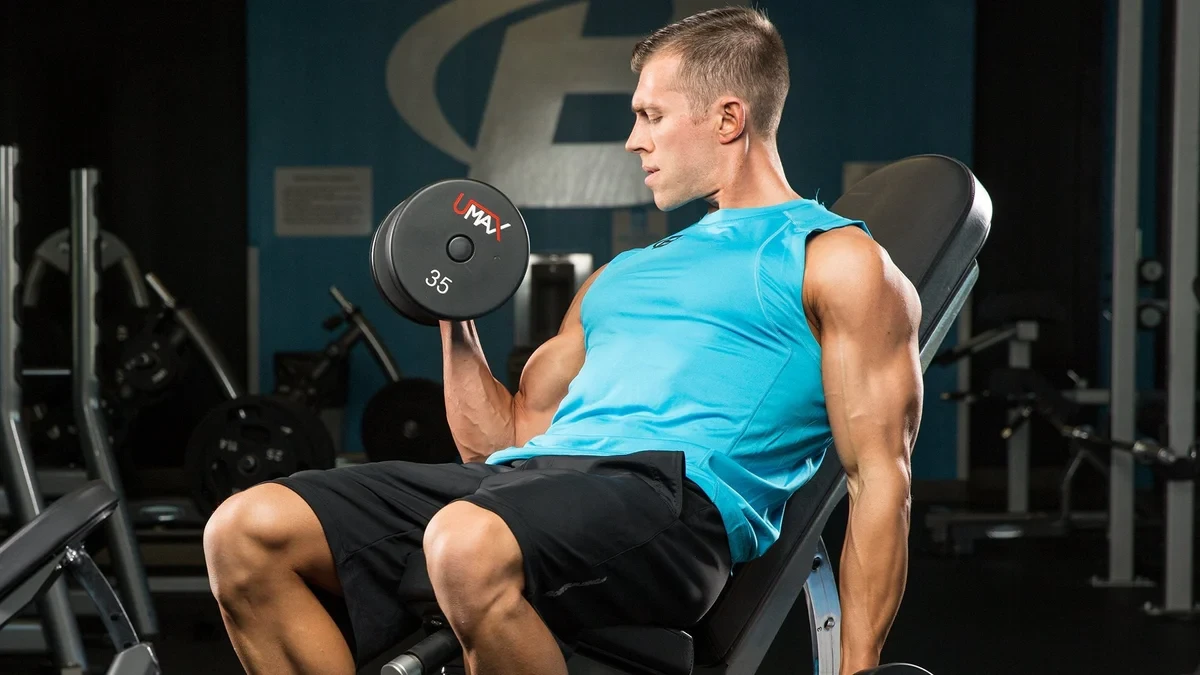
Why it's on the list: What differentiates a 90-degree curl from a 45-degree incline curl? More than you might think. The incline curl elongates the biceps and amplifies stretch at the start of the movement, theoretically targeting the long head and promoting “biceps peak” development.
Incline Curl Variations for Biceps Growth:
Incline Dumbbell Curl (bilateral, alternating)
Palms-Out Incline Curl
Incline Hammer Curl
In your workout: This is a detail exercise, not a main lift. Perform it after compound movements (e.g., standing curls) that target both biceps heads with heavy weight. Due to the overstretched arm position at the bottom, use relatively light weights and aim for 8–12+ reps per set.
Concentration Curl
Why it's on the list: The concentration curl’s strong performance in muscle-activation studies is not without justification. The torso position restricts shoulder involvement, and many individuals report a heightened mind-muscle connection during this exercise— a factor for which emerging evidence suggests a role in enhancing muscle growth.
Concentration Curl Variations for Biceps Growth:
Concentration Curl (seated, standing)
Close-Grip Concentration Curl
Cable Concentration Curl
Band Concentration Curl
In your workout: Treat this as a light, strict movement to finish your biceps session when fatigued. Select a weight that causes failure around 10–12 reps.
Preacher Curl
Why it's on the list: The preacher curl has multiple variations, and every serious physique athlete has a preferred version. Regardless of the variant, it induces a significant pump—especially when combined with a quality pre-workout or pump supplement. This classic peak-builder can anchor an entire biceps workout (with the addition of hammer curls, for example).
Like other stretched-position movements, the preacher curl maximizes muscle activation in the lower third of the rep. As the weight rises, muscle demand decreases—making cable-based preacher curls ideal for maintaining tension throughout the range of motion.
Preacher Curl Variations for Biceps Growth:
Cable Preacher Curl (underhand, hammer)
EZ-Bar Preacher Curl
Dumbbell Preacher Curl (bilateral, single-arm, hammer)
Spider Curl (dumbbell, EZ-bar)
Machine Preacher Curl (bilateral, single-arm)
In your workout: The fixed arm position against the bench enforces strict form, minimizing cheating. Perform this movement in the latter half of your workout (8–12 reps per set).
Drag Curl
Why it's on the list: Unlike traditional barbell curls—where elbows are fixed at the sides—the drag curl requires pushing the elbows backward while keeping the bar close to the torso during the concentric phase. This reduces the range of motion, so maximal upward displacement is limited.
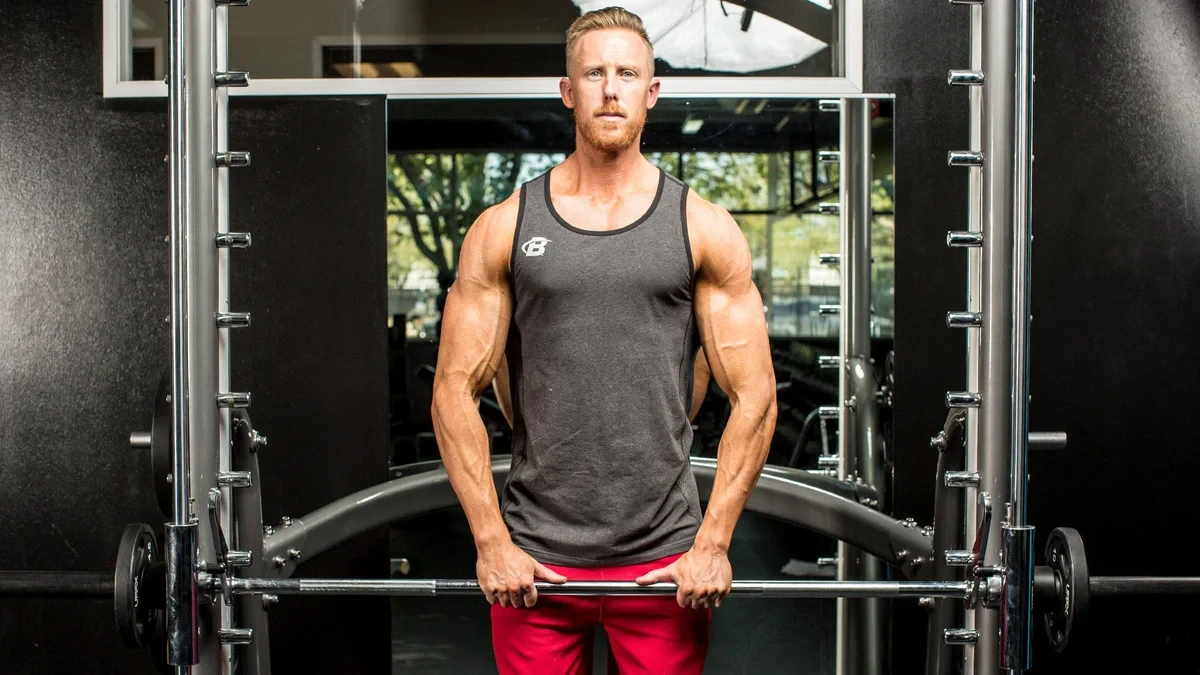
The drag curl can also be performed effectively on a Smith machine. It is a favorite biceps-building “hack” of Kris Gethin, featured in his popular 8-Week Hardcore Daily Video Trainer.
Drag Curl Variations for Biceps Growth:
Barbell Drag Curl
Smith Machine Drag Curl
Dumbbell Drag Curl
In your workout: Program this exercise like other barbell curls—heavy at the start or lighter later. To increase difficulty, extend the eccentric phase to 3–5 seconds per rep. Aim for 5–8 reps, using a spotter for the concentric phase if needed.
Best Biceps Workouts
Hard and Heavy Biceps Workout
Designed for individuals who prioritize weekly biceps training, this workout begins with heavy curl variations before progressing to lighter dumbbell and cable movements. It is particularly well-suited as a post-back-training biceps session.
Biceps Workout for Beginners
Avoid indiscriminately adopting high-volume workouts from professional bodybuilders. Focus on three key movements with intent, ensuring a sense of accomplishment and a clear stimulus for arm growth. This routine is effective as a standalone session or as part of a lower-volume, 2–3 day per week arm-training approach—aligning with the methodology of Jim Stoppani’s popular program, Six Weeks to Sick Arms.
Machine Pump Biceps Workout
For those who value the muscular pump and mind-muscle connection, this high-repetition, short-rest workout delivers the desired effect. Incorporate dropsets to maximize the benefits of pre-workout supplementation.